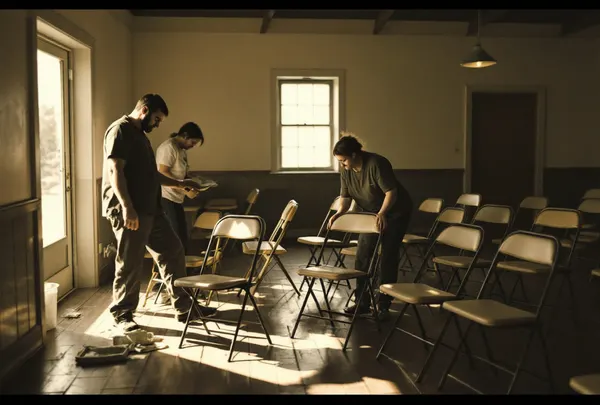

Illustrative image. Examples in this guide are hypothetical.
A volunteer role can depend on details that never made it into a formal description. When the person doing the work leaves, those details can disappear with them. A useful handover captures what the next person needs without copying private information into an informal document.
Describe the task as it is now
List the recurring work, the current schedule and the person who supervises it. Distinguish official procedures from personal shortcuts. A habit that worked for you may not be authorized or appropriate for someone else.
Identify unfinished work and its actual status. “Waiting for coordinator approval” is more useful than “nearly done.” Include the next action and where the approved record can be found. Avoid inventing deadlines because an empty date column looks untidy.
The volunteer-boundaries guide explains why task, availability and supervision should be explicit from the beginning. A handover is a chance to make those boundaries visible again.
Transfer information through the organization
Ask the coordinator which records should be handed over, where they belong and who may receive them. Do not send participant details to a personal account simply because the next volunteer finds it convenient. Use the organization’s approved process.
Return equipment and access according to that process. A saved password or copied contact list should not remain with a former volunteer merely in case it becomes useful later. The organization should decide how access changes and records are retained.
If a document mixes useful instructions with private information, ask how to separate them. A practical checklist can often describe the workflow without reproducing the sensitive record itself.
Make room for the practical things
Reading about generosity
Borrow before buying. Compare the author’s assumptions, audience and publication date with the questions your family is asking.
Read the selection notes →Start with the next ordinary shift
Imagine that you coordinate the equipment cupboard at a community club and will stop volunteering next month. This is an invented example. Your replacement does not first need the history of every cupboard rearrangement. They need to know how the next ordinary session starts, what to check during it and how to leave the equipment afterward. Organize the handover around that sequence.
Walk through the task while writing the instructions. Where do you obtain authorized access? Which list identifies equipment already borrowed? Who decides whether a damaged item can be used? What happens when something is missing at closing? Keep the answers in the organization's approved location. Where an answer depends on another person, identify the role rather than assuming the newcomer can make the decision alone.
Separate recurring work from unusual situations. The ordinary checklist might explain opening, counting and returning items. A short exceptions section can identify who handles damage, missing equipment or a participant concern. Do not improvise incident procedures in your personal handover. Point to the organization's current instructions and the responsible contact. A newcomer needs to know when to stop and ask as well as when to proceed.
Show the work, then let the newcomer try
If the coordinator agrees that an overlap session is useful, give it a defined purpose. Demonstrate one ordinary task and explain why the steps appear in that order. Then let the new volunteer work through it while you remain available for questions. Watching somebody else do a task can hide gaps that become obvious when the learner has to find the right form or recognize the right cupboard.
Use the attempt to improve the instructions, not to test whether the newcomer can read your mind. If a step relies on a nickname, an unstated habit or a document you keep in your personal bag, revise it. The goal is a usable process after you leave. A note that works only while its author stands beside it has not yet captured the essential information.
Make room for different ways of working within the approved procedure. Your replacement may prefer a printed checklist where you used a digital one. That is different from bypassing an organization's required check. Distinguish a personal preference from a rule so the newcomer does not inherit unnecessary restrictions simply because you found them convenient.
Build an honest unfinished-work list
A useful list describes a small number of live items rather than every task that might someday occur. For each, include the current state, the next action, the person responsible and the location of the supporting record. Add a deadline only when there is a real reason for it. If a date is your own target, label it that way.
For the equipment cupboard, an entry might say that a damaged bag has been set aside, the coordinator has been told, and a replacement decision is pending. It should not say that a replacement is on order unless an order actually exists. The difference matters because a new volunteer may otherwise wait for a parcel that nobody has arranged.
Keep complaints and sensitive incidents out of a general task list. Follow the organization's reporting and access rules for those records. You can note that an issue has been referred to the appropriate person without reproducing private details. The resource guide can help you organize ordinary planning material, but the organization determines where its operational records belong.
A compact handover page
The following outline is a starting point for a routine volunteer task. Remove fields that do not apply and ask the coordinator to review anything that touches access or responsibility.
| Part | Useful content |
|---|---|
| Purpose | What the role is meant to accomplish |
| Regular work | The normal sequence and agreed frequency |
| Boundaries | Decisions the volunteer may make and matters to refer |
| Sources | Where current instructions and approved records are kept |
| Open items | Actual status and agreed next action |
| Returned items | Equipment or access handled through the normal process |
| Finish | Last agreed shift and handover contact |
Keep an update date on the page. If there are several versions, identify which one the coordinator has reviewed. Avoid keeping an unofficial “real instructions” document alongside the approved version. If the official instructions are unclear, raise that problem directly so it can be corrected for everyone who needs them.
Choose a realistic end to your availability
An offer to answer questions can be kind, but “contact me whenever you need anything” can quietly keep the old role alive. Decide what you can actually offer and discuss it with the coordinator. Perhaps you can answer a few clarification questions during a short transition period. Perhaps your circumstances require a clean finish. Either is easier to manage when stated clearly.
Do not promise to remain a backup unless the role, contact method and limits are understood. A vague backup arrangement may leave the organization believing that a gap is covered when it is not. If you cannot take shifts after your end date, say so. You can still provide a useful handover without accepting an indefinite obligation.
When questions arrive later, route decisions through the current coordinator. You may remember why an old process was chosen, but the organization may have changed it. Explain the historical context if appropriate without presenting yourself as the continuing authority. The new volunteer should not have to choose between two competing sets of instructions.
If there is nobody to receive the role
Sometimes a replacement has not been found. Hand the records and open items to the coordinator or another authorized person rather than holding them indefinitely. Mark which work will not be covered after your final date. An honest gap allows the organization to decide whether to reduce an activity, redistribute the task or recruit help.
Resist filling the gap by making promises on behalf of someone else. A friend who might be interested has not agreed to take the role. Give the coordinator the information they need and let recruitment follow the organization's process. A responsible ending can be orderly even when the next arrangement is not yet complete.
Leave questions visible
You do not need to solve every issue before leaving. Write down the questions that remain and identify the person best placed to answer them. A candid uncertainty is more helpful than an instruction that sounds confident but rests on guesswork.
Offer feedback in specific terms. Describe where a task took longer than expected or where instructions conflicted. Avoid turning a handover note into a judgment about individuals. The purpose is continuity of the work.
A final conversation with the coordinator can confirm that the essential items have been transferred. After that, let the new arrangement operate through its own responsibilities. Helping well includes knowing when the handover is finished.
Keep one useful next step
Reading about generosity
Borrow before buying. Compare the author’s assumptions, audience and publication date with the questions your family is asking.
Read the selection notes →