
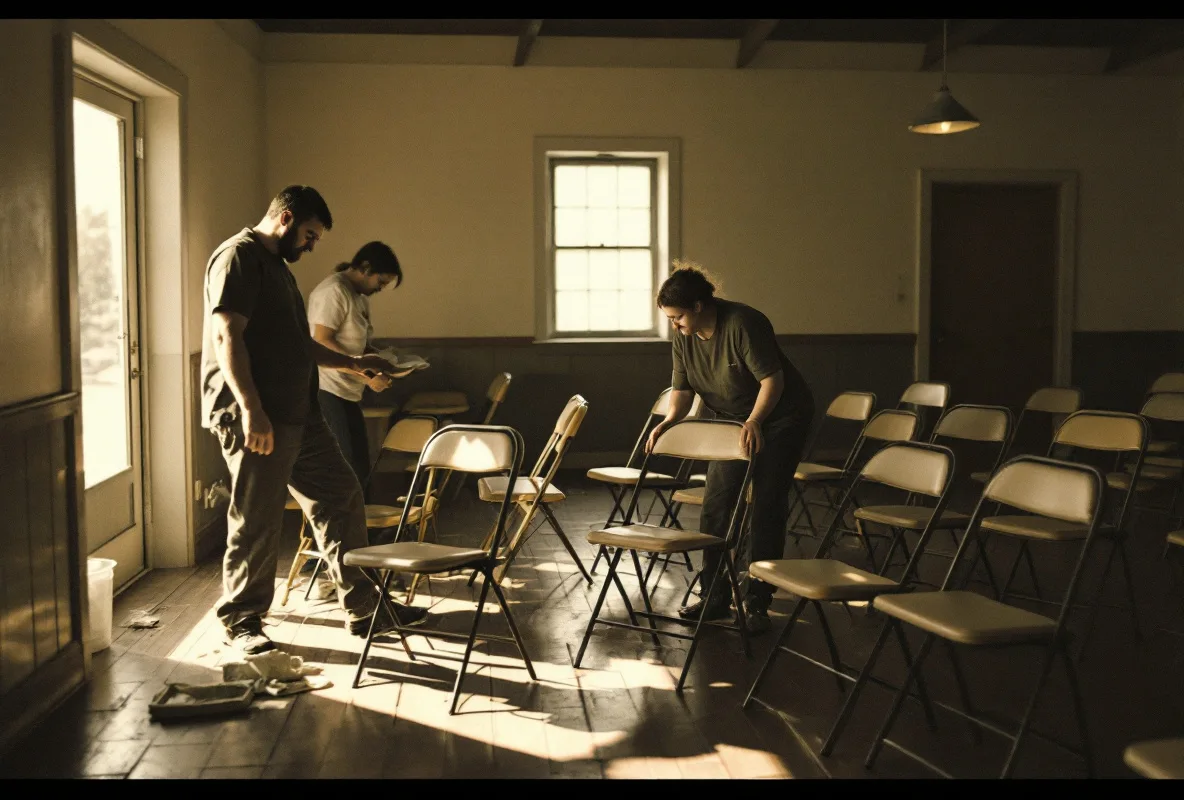
Illustrative image. Examples in this guide are hypothetical.
An offer of time is easier to accept when it describes a real task and a realistic commitment. “Let me know if you need anything” is warm, but it leaves the organization to invent a role, estimate your availability and decide how much it can ask. A more specific offer can save work for everyone.
Clarity also protects the volunteer. Enthusiasm does not create unlimited availability, and an informal introduction does not replace an organization's screening, training or safeguarding procedures. A useful role fits the work, the volunteer and the people affected by the activity.
Ask what work already exists
Begin by asking whether the organization has a defined volunteer role that matches your interests and availability. A current role usually comes with a clearer idea of tasks, supervision and timing than a position invented solely because someone offered to help.
Listen for the ordinary work as well as the visible activity. Setup, inventory, administration and cleanup may be as necessary as the public-facing role. If a task does not appeal to you, say so respectfully rather than accepting and hoping it will become something else.
An organization may have no suitable opening. That is not necessarily a judgment about your willingness or ability. It may lack supervision, space or a current need. A good offer leaves the recipient free to decline without having to apologize for its constraints.
Describe availability honestly
State the days, times and duration you can realistically offer. Include limits that affect reliability, such as irregular work hours or a commitment that ends after a particular month. A small dependable window may be more useful than a broad promise that repeatedly changes.
Do not assume that “occasional” means the same thing to both parties. It might mean once a month to you and availability at short notice to the coordinator. Ask what the organization needs and define the arrangement in concrete terms.
Avoid offering time you expect to find later. If your availability is uncertain, say that you are exploring a future possibility. That distinction lets the coordinator plan without counting on a commitment you have not yet made.
Make room for the practical things
Reading about generosity
Borrow before buying. Compare the author’s assumptions, audience and publication date with the questions your family is asking.
Read the selection notes →Equipment with a clear use
Ask the receiving club what it can use before buying. Storage, size and maintenance often matter more than novelty.
Read the selection notes →Clarify the task and its limits
Ask what you would be expected to do, what you would not be expected to do and who would decide if the role changes. A written role description can be helpful even for a modest activity. It provides a shared reference when memory differs.
Consider the practical boundaries. Will you handle equipment, communicate with participants, use an organization account or work at a particular location? Which tasks require training, authorization or another person present? The organization should explain its current procedures.
Do not treat previous experience as automatic permission to skip those procedures. A person can be capable and still need to learn the local process. For roles involving children or vulnerable people, follow the organization's safeguarding and screening requirements before beginning.
Know who supervises the work
Identify the person who assigns tasks, answers questions and handles concerns. A volunteer who receives conflicting instructions from several people needs a clear way to resolve them. Otherwise, helpfulness can turn into guessing whose request takes priority.
Ask how to communicate during the activity and between sessions. Use the organization's approved channels. Personal messaging accounts can create privacy and boundary problems if they become an improvised substitute for a formal communication process.
Understand how to report an incident or a concern. This guide does not prescribe a universal procedure; the responsible organization must provide the relevant one. If the process is unclear, ask before taking on a role where the uncertainty could matter.
Discuss training and preparation
Find out what training is required, when it happens and whether preparation time is part of the commitment. A one-hour activity may involve travel, setup and a briefing that make the actual time much longer. Count those parts before agreeing.
Ask what equipment or clothing is required and who supplies it. Do not buy specialized items until the organization confirms the specification. If an expense would make participation difficult, raise the question rather than quietly assuming the cost is unavoidable.
Keep the distinction between orientation and ongoing support. A single introductory session may not answer every question that arises later. Ask how a volunteer gets help after the first day and how changes to procedures are communicated.
Make the first commitment small enough to learn from
Where the organization permits it, a defined initial period can help both parties assess the fit. Agree on the task, schedule and review point. A trial should not be used to bypass screening or treat participants as an experiment; it is a way to evaluate the working arrangement.
At the review, discuss what actually happened. Was the role clear? Was the time estimate realistic? Did the coordinator have the support needed to supervise it? A useful review includes the organization's experience as well as your own.
If the role is not a good fit, consider whether a specific adjustment would help. A different task or schedule may solve the problem. If not, ending the arrangement respectfully can be better than letting missed sessions and resentment accumulate.
Keep participant privacy separate from your story
Volunteering can be meaningful without becoming material for public posts. Follow the organization's rules about photographs, names, personal information and accounts of activities. A person receiving support should not have to become part of your public narrative in return.
Ask before using the organization's name or logo in a public description of your involvement. Do not imply employment, professional credentials or organizational endorsement that you do not hold. A concise factual account of a permitted role is enough.
The same care applies in private conversation. Interesting details about a participant may still be confidential. When you want to describe what you learned, focus on your own actions and the general task rather than someone else's personal circumstances.
Plan for absence and change
Know how much notice to give if you cannot attend and whom to contact. Illness and unexpected obligations happen. A clear process helps the organization respond without spending the session trying to locate you.
Do not arrange your own substitute unless the organization explicitly permits it. A friend who is willing to help may not have completed the required screening or training. The coordinator should decide how a gap is covered.
If your availability changes permanently, say so early. An honest reduction is easier to plan around than a pattern of last-minute cancellations. Reliability includes communicating limits, not pretending you have none.
End with a useful handover
When leaving a role, agree on the final date and any handover work. Return equipment, records and access according to the organization's process. Do not keep participant information or account access because it might be convenient later.
A short note about unfinished tasks can help the next person. Keep it factual and within the role's privacy rules. Identify what remains, where the approved records are and who knows the current status.
You can offer feedback without turning the handover into a verdict on the whole organization. Describe specific observations and practical suggestions. The purpose is to leave the work easier to continue.
Connect time with the rest of your giving plan
Time can sit alongside money and goods in a broader plan, but keep the records distinct. Hours are not automatically a cash value, and a personal estimate should not be treated as a tax conclusion. If a tax question arises, consult current official information and an appropriate adviser. IRS Publication 526 distinguishes contribution and recordkeeping topics; use the applicable edition for the actual question.
The giving-today overview can help you describe the commitment, while the family conversation guide may help when the schedule affects others. The community sport notes cover practical support in that setting.
A clear volunteer offer is a promise of a particular contribution under understood conditions. It does not need to be large to be valuable. Knowing the task, the limits and the person to ask makes it easier to show up in a way the organization can use.
Write a one-sentence offer
Try this structure in your own words: the task you are interested in, the time you can offer and the period you can commit to, subject to the organization's process. That sentence is not a contract. It is a clear opening for a conversation in which the coordinator can confirm, adjust or decline the proposal.
Ask how the role’s success will be discussed. A coordinator may care most about reliable attendance, accurate records or completing a particular preparation task. Knowing that expectation helps you focus on useful work instead of inventing a visible achievement. At a review, describe what you completed and where help was needed. A straightforward account gives the organization better information than a polished story that hides ordinary difficulties.
Keep one useful next step
Reading about generosity
Borrow before buying. Compare the author’s assumptions, audience and publication date with the questions your family is asking.
Read the selection notes →Equipment with a clear use
Ask the receiving club what it can use before buying. Storage, size and maintenance often matter more than novelty.
Read the selection notes →